The argument through time
History enters the room.
c. 30–150
Worshiping Jesus inside Jewish monotheism
What happened
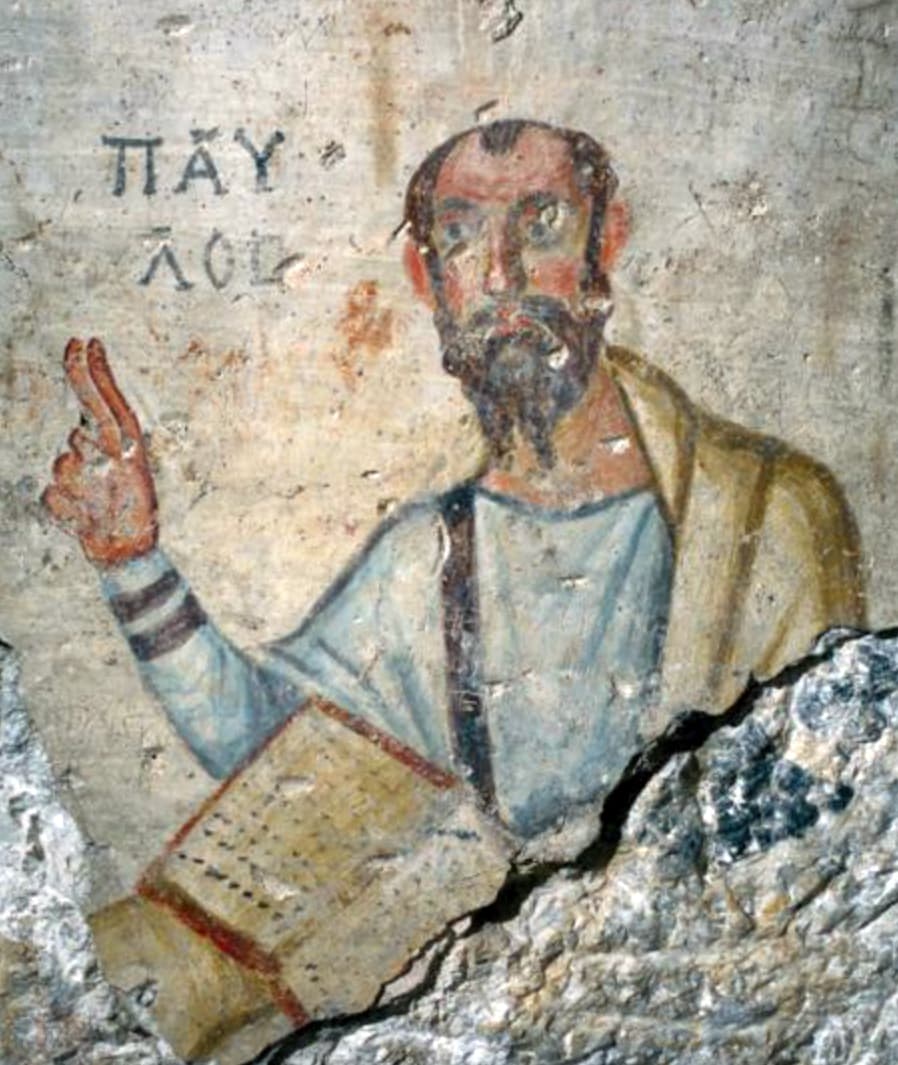
From the beginning, Christians did something audacious: they worshiped Jesus — hymns, prayers, baptism in his name — while insisting God is one. Paul folds Jesus into Israel's central creed ('one God, the Father… one Lord, Jesus Christ,' 1 Cor 8:6); John opens with the Logos who 'was God.' Around 112, a pagan governor reports Christians singing 'to Christ as to a god.'
Primary source“They were accustomed to meet on a fixed day before dawn and sing responsively a hymn to Christ as to a god.”
— Pliny the Younger, report to Trajan, c. 112
How it was received
The doctrine of the Trinity is best understood as three centuries of asking what must be true of God for this worship not to be idolatry.
Key voicesPaul · John's Gospel · Pliny the Younger
150–260
First drafts: Logos, modalism, and a new word
What happened
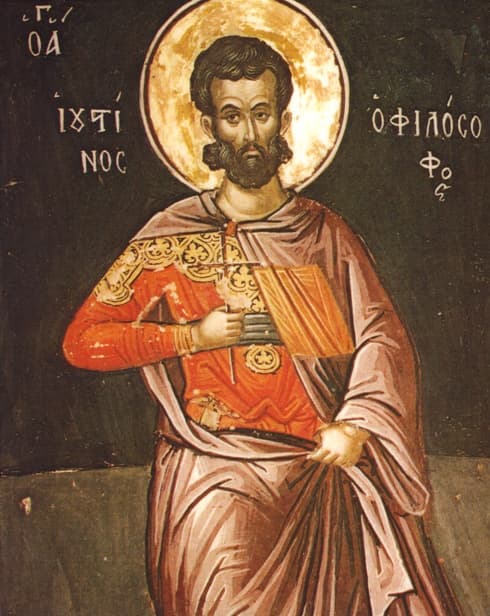
Justin Martyr explained the Son as God's Logos — divine, yet 'numerically distinct' from the Father. Others protected God's oneness by collapsing the distinction: modalists (Sabellius) said Father, Son, and Spirit are one God wearing three masks; adoptionists said Jesus was a man promoted. Both were rejected — the church wanted real threeness and real oneness.
How it was received
Tertullian coined the vocabulary the West still uses — trinitas, one substance, three persons — a full century before Nicaea. Origen contributed the eternal generation of the Son, alongside subordinationist phrasing his heirs would fight over.
Key voicesJustin Martyr · Sabellius · Tertullian · Origen
318–325
Arius and Nicaea
What happened
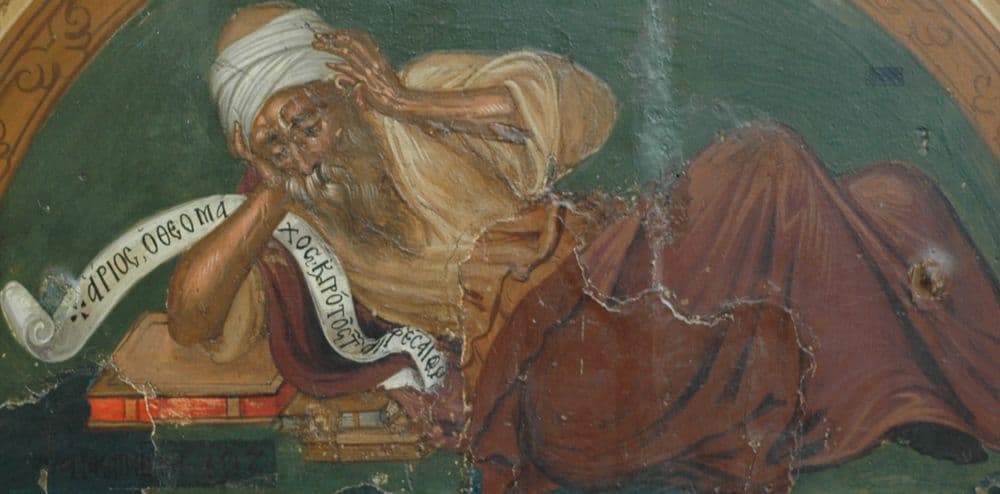
Arius, a presbyter of Alexandria, drew the sharp conclusion: if the Son is begotten, 'there was when he was not' — the Son is the first and greatest creature, but a creature. The slogan spread by sailors' songs; the empire took sides.
Primary source“God from God, Light from Light, true God from true God, begotten not made, of one being with the Father.”
— Creed of Nicaea, 325
How it was received
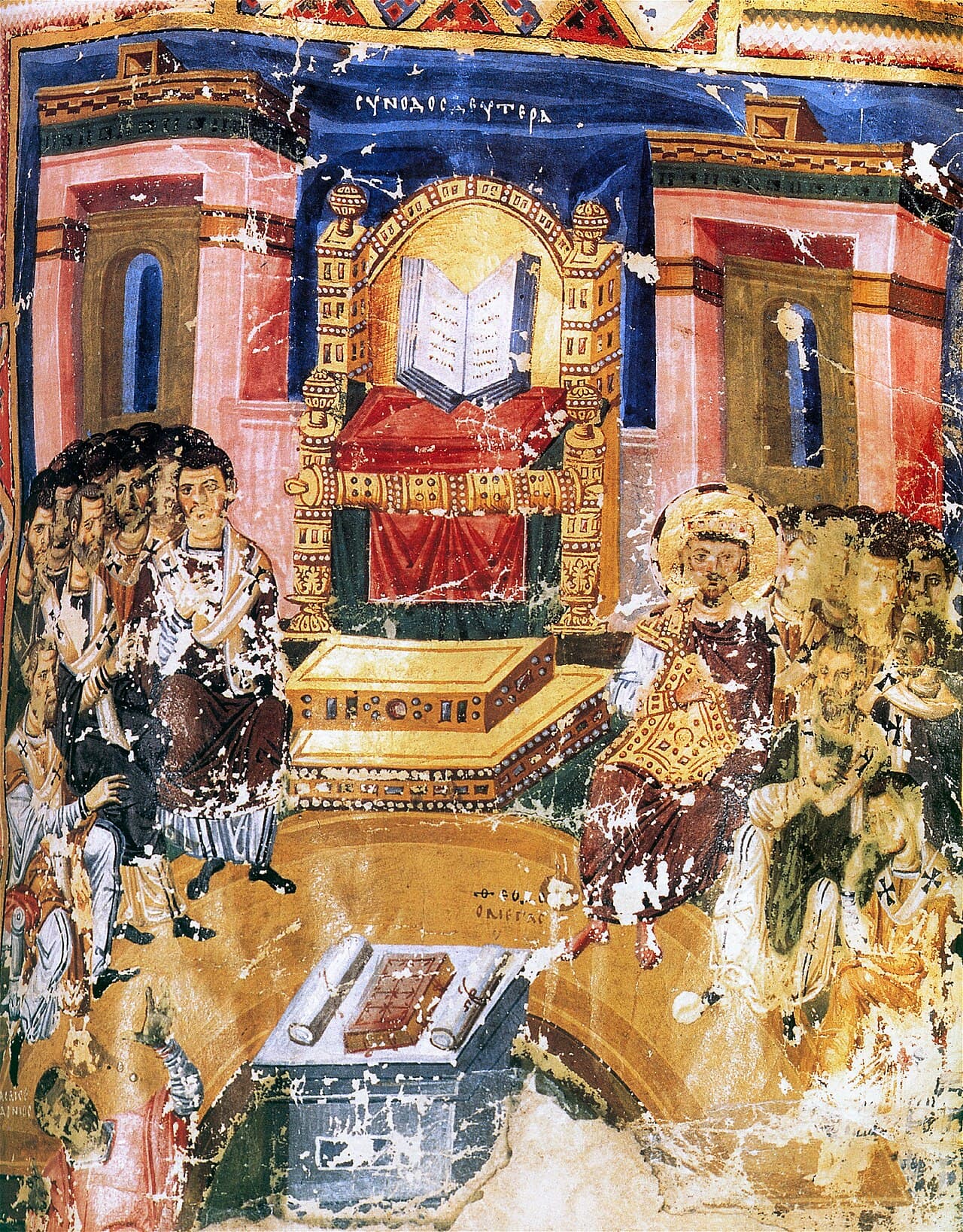
Constantine summoned the first ecumenical council at Nicaea (325), which anathematized Arius and confessed the Son as 'true God from true God, begotten not made, homoousios (of one being) with the Father' — deliberately choosing a non-scriptural word because Arians could sign every scriptural one.
Key voicesArius · Constantine · Council of Nicaea
325–381
The world groans, Athanasius stands
What happened
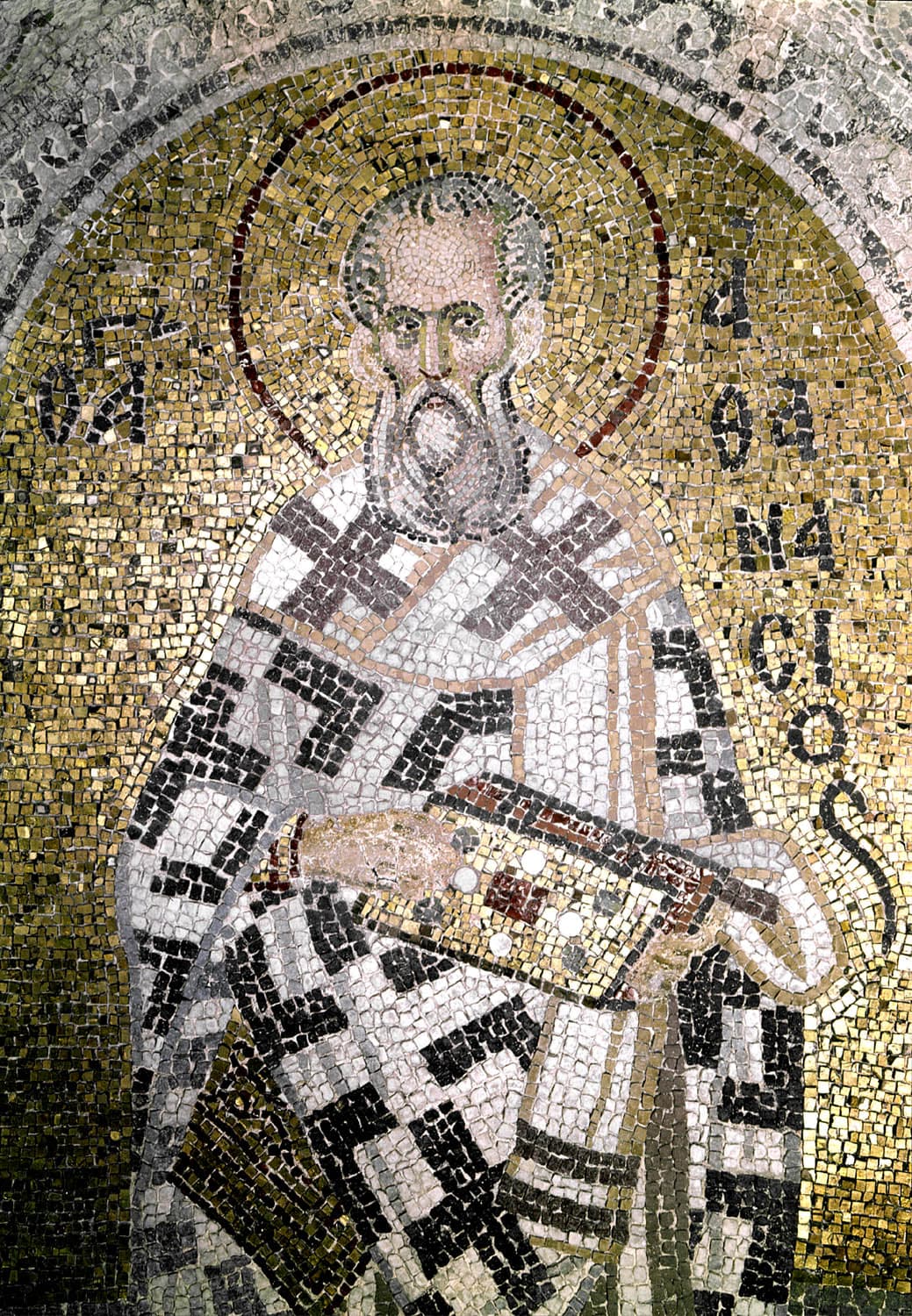
Nicaea settled nothing at first. Arian and semi-Arian councils multiplied under sympathetic emperors; Jerome quipped that 'the whole world groaned and marveled to find itself Arian.' Athanasius of Alexandria was exiled five times defending homoousios — Athanasius contra mundum.
How it was received
The Cappadocian fathers (Basil, the two Gregorys) supplied the settled grammar — one ousia, three hypostases — and extended it to the Holy Spirit. The Council of Constantinople (381) confirmed the faith of Nicaea and the Spirit as 'the Lord, the giver of life… who with the Father and the Son is worshiped and glorified.' The Trinity was now dogma.
Key voicesAthanasius · Basil the Great · Gregory of Nazianzus · Gregory of Nyssa
428–451
Chalcedon: one person, two natures
What happened
With the Trinity settled, the question turned inward: how do God and man meet in Christ? Nestorius seemed to split Christ into two subjects (Ephesus condemned him, 431); Eutyches blended the natures into one (condemned in turn).
Primary source“…one and the same Christ, Son, Lord, only-begotten, made known in two natures without confusion, without change, without division, without separation.”
— Definition of Chalcedon, 451
How it was received
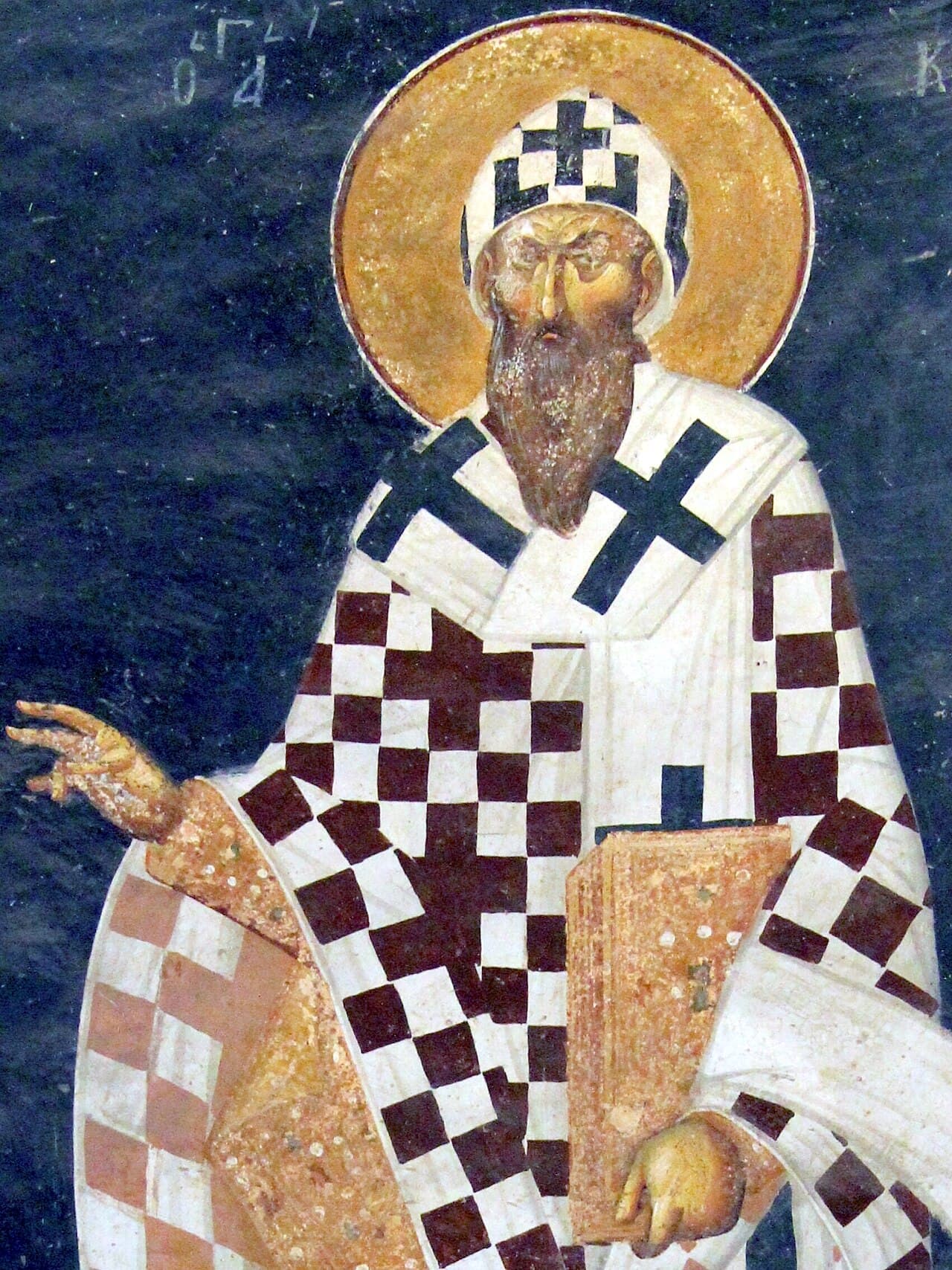
The Council of Chalcedon (451), leaning on Leo's Tome, gave the classic definition: one person in two natures, 'without confusion, without change, without division, without separation.' Four negatives — a fence around a mystery rather than an explanation of it.
Key voicesCyril of Alexandria · Nestorius · Leo the Great · Council of Chalcedon
451–681
The first lasting schisms
What happened
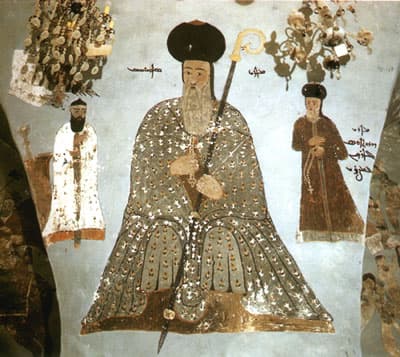
The fifth-century Christological controversies produced several enduring divisions. The Church of the East had already rejected the condemnation of Nestorius at Ephesus (431). After Chalcedon (451), churches that became the Oriental Orthodox rejected its 'in two natures' formula as liable to a Nestorian reading and confessed Cyril's 'one incarnate nature of God the Word' in a miaphysite sense.
How it was received
Byzantine attempts to reunite the empire produced monothelitism (one will in Christ), resisted at the cost of Maximus the Confessor's tongue and hand; Constantinople III (681) confessed two wills, divine and human, in the one Christ.
Key voicesSeverus of Antioch · Maximus the Confessor · Constantinople III
1900–today
Revival, revision — and a 1,500-year misunderstanding eased
What happened
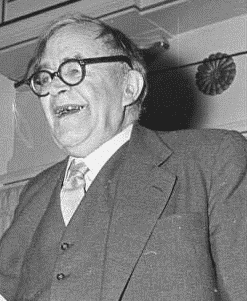
The twentieth century brought a trinitarian renaissance: Barth and Rahner re-centered theology on the Trinity ('the economic Trinity is the immanent Trinity'), while social trinitarians (Moltmann, Zizioulas) mined the doctrine for community and personhood — with critics warning against projecting sociology into God.
How it was received
Most remarkably, formal dialogues (1990) concluded that Chalcedonians and Oriental Orthodox had largely been confessing the same faith in different words for fifteen centuries — one of ecumenism's quietest triumphs. Meanwhile Jehovah's Witnesses, Latter-day Saints, and Oneness Pentecostals renew, in modern dress, options the councils declined.
Key voicesKarl Barth · Karl Rahner · John Zizioulas · Agreed Statements 1990
The present landscape
Where the traditions stand today
Catholic, Orthodox & Protestant
All confess Nicaea and Chalcedon: one God in three persons; Christ one person in two natures. This is the broadest doctrinal consensus in Christianity.
Oriental Orthodox & Church of the East
Non-Chalcedonian Christologies (miaphysite; historically 'Nestorian') — now widely recognized, via agreed statements, as differing in formula more than in faith.
Nontrinitarian movements
Jehovah's Witnesses (Arian-like), Oneness Pentecostals (modalist-like), and Latter-day Saints stand outside the conciliar consensus by design.