The argument through time
History enters the room.
c. 30–110
Ekklesia: images without a definition
What happened
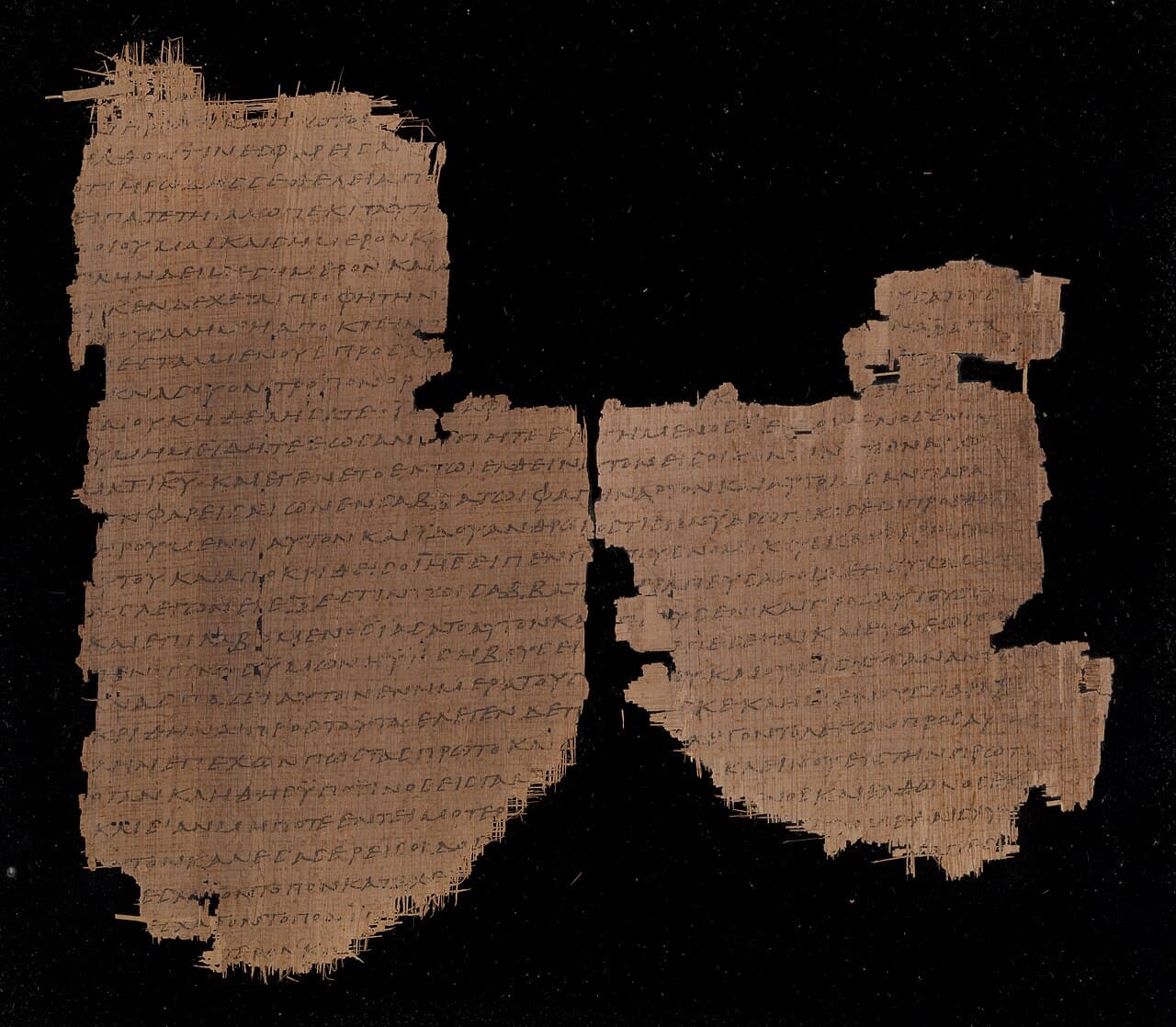
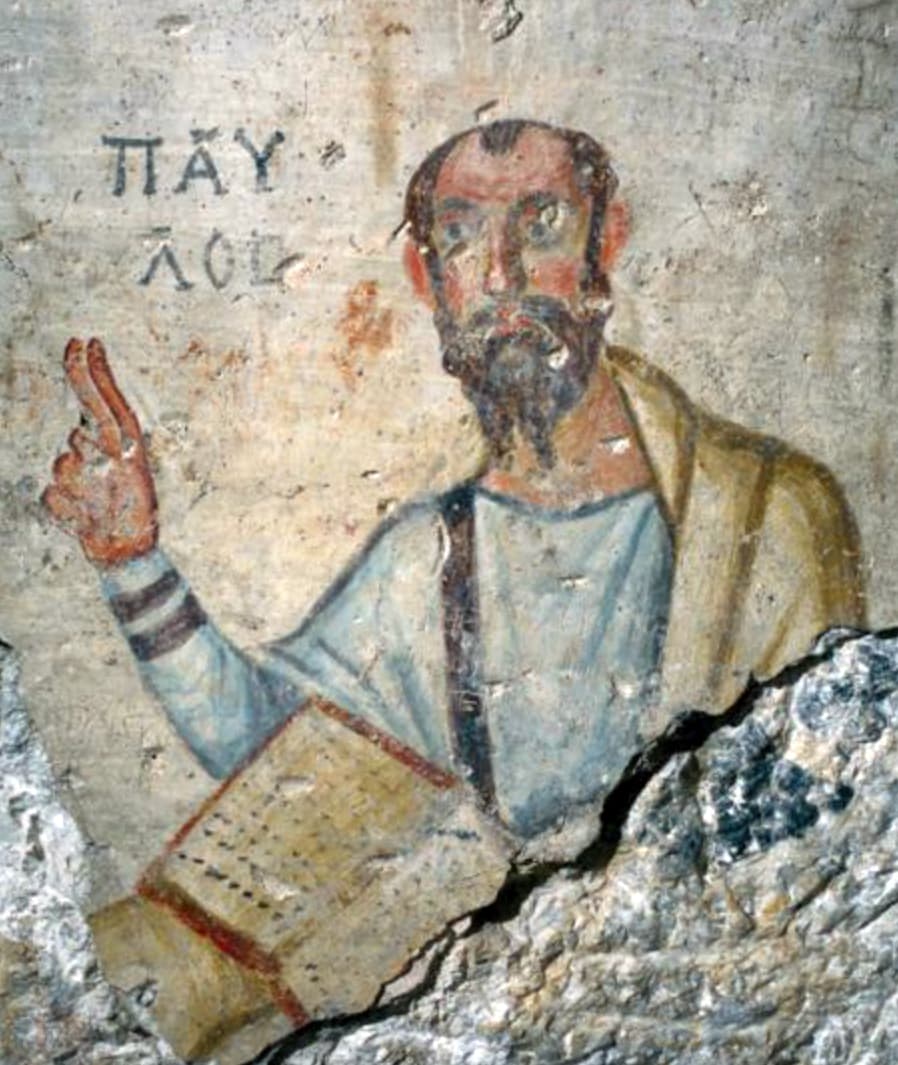
The New Testament never defines the church; it piles up images — body of Christ, bride, temple of living stones, flock, vine, pilgrim people of God. Local assemblies and the one universal assembly share a single word, ekklesia. Discipline exists (Matthew 18), office is emerging, but the boundary between church and world is drawn primarily by baptism and confession.
How it was received
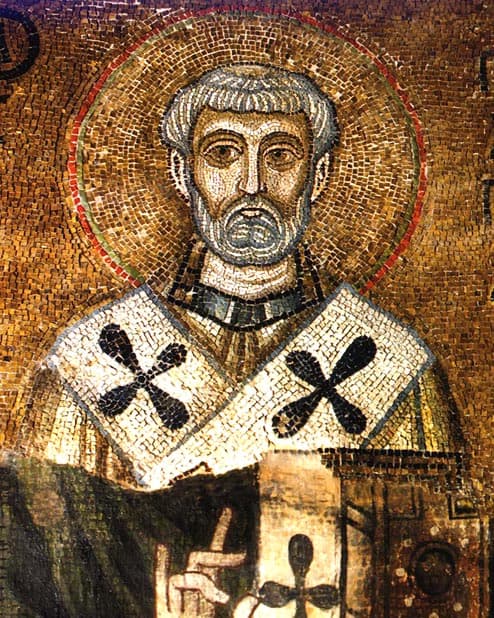
Ignatius (c. 110) gives the word its future: 'wherever Jesus Christ is, there is the catholic church' — the first surviving use of the phrase.
Key voices1 Corinthians 12 · 1 Peter 2 · Ignatius of Antioch
![Russian icon: Cyprian of Carthage Heiligenlexikon.de Image was kindly "publicized" by ÖHL [1]](/_next/image?url=%2Fimages%2Fhistory%2Fsections%2Fcyprian-of-carthage-3c7cb566.jpg&w=3840&q=75&dpl=dpl_7eb3JpnMe4ekXihsASES3CnRvKef)
251–258
Cyprian: no salvation outside — outside what?
What happened
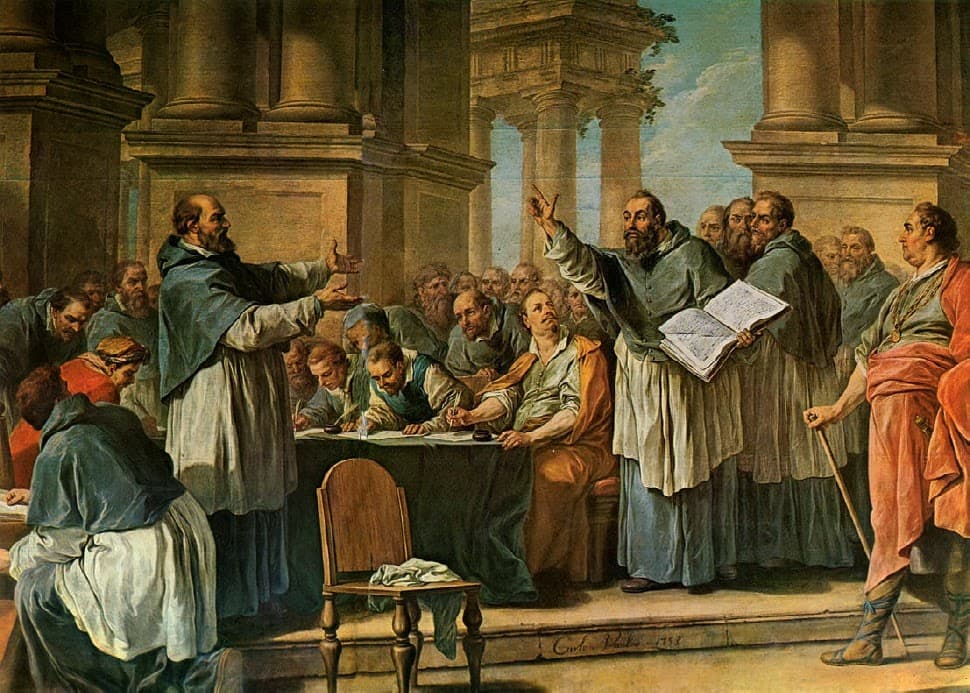
Amid persecution and schism, Cyprian forged the hard-edged classics: the church is the ark, and 'outside the church there is no salvation'; 'he cannot have God for his Father who does not have the church for his mother.' For Cyprian the boundary was concrete: communion with the legitimate bishop.
Primary source“He cannot have God for his Father who does not have the Church for his mother.”
— Cyprian, On the Unity of the Church 6, 251
How it was received
Every subsequent ecclesiology is a negotiation with those sentences — who is inside, what counts as outside, and whether the walls of the ark are where we think they are.
Key voicesCyprian of Carthage · Novatianist schism
311–430
Donatism: the pure church versus the mixed body
What happened
The Donatists held that a church compromised by traitor-bishops was no church: holiness is the mark, and the true church is the pure one. Augustine answered with the corpus permixtum: until harvest the field holds wheat and tares together (Matthew 13); the church's holiness is Christ's, not the members' — and catholicity, communion with the whole world, exposes the sect.
How it was received
Augustine's anti-Donatist account strongly shaped the Western understanding of a geographically catholic and morally mixed church. Later believers'-church movements also stressed discipline and visible commitment, but they arose in different settings and should not simply be treated as Donatism returning.
Key voicesDonatists · Augustine · Parable of the tares
381–1302
Four marks — and the institution absolute
What happened
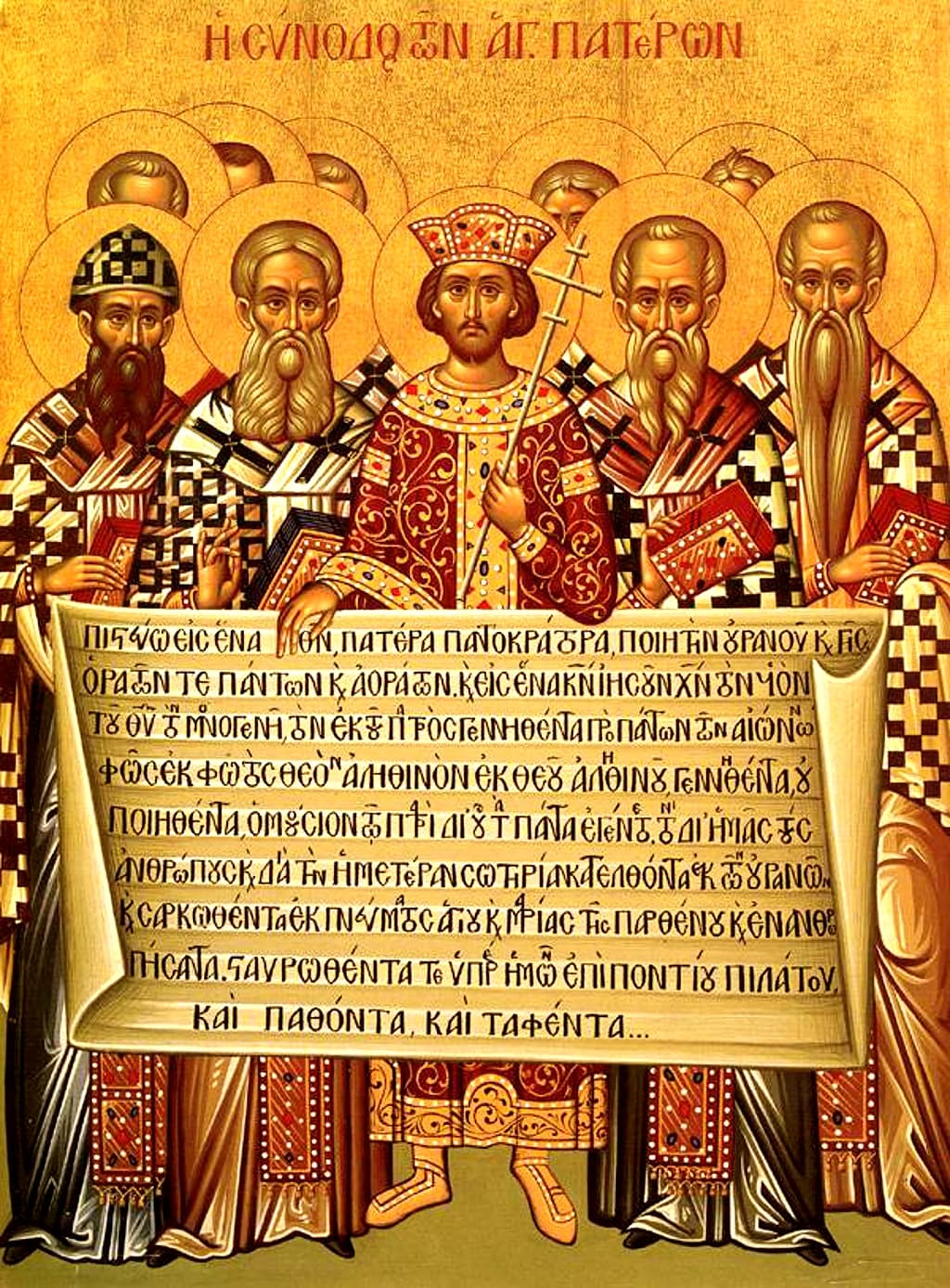
The creed associated with Constantinople (381) names the church as one, holy, catholic, and apostolic. Medieval Latin theology increasingly linked visible unity to communion with the Roman see. Boniface VIII's Unam Sanctam (1302) gave that claim an especially strong papal form: one church, outside which no salvation, and subjection to the Roman pontiff described as necessary for salvation.
How it was received
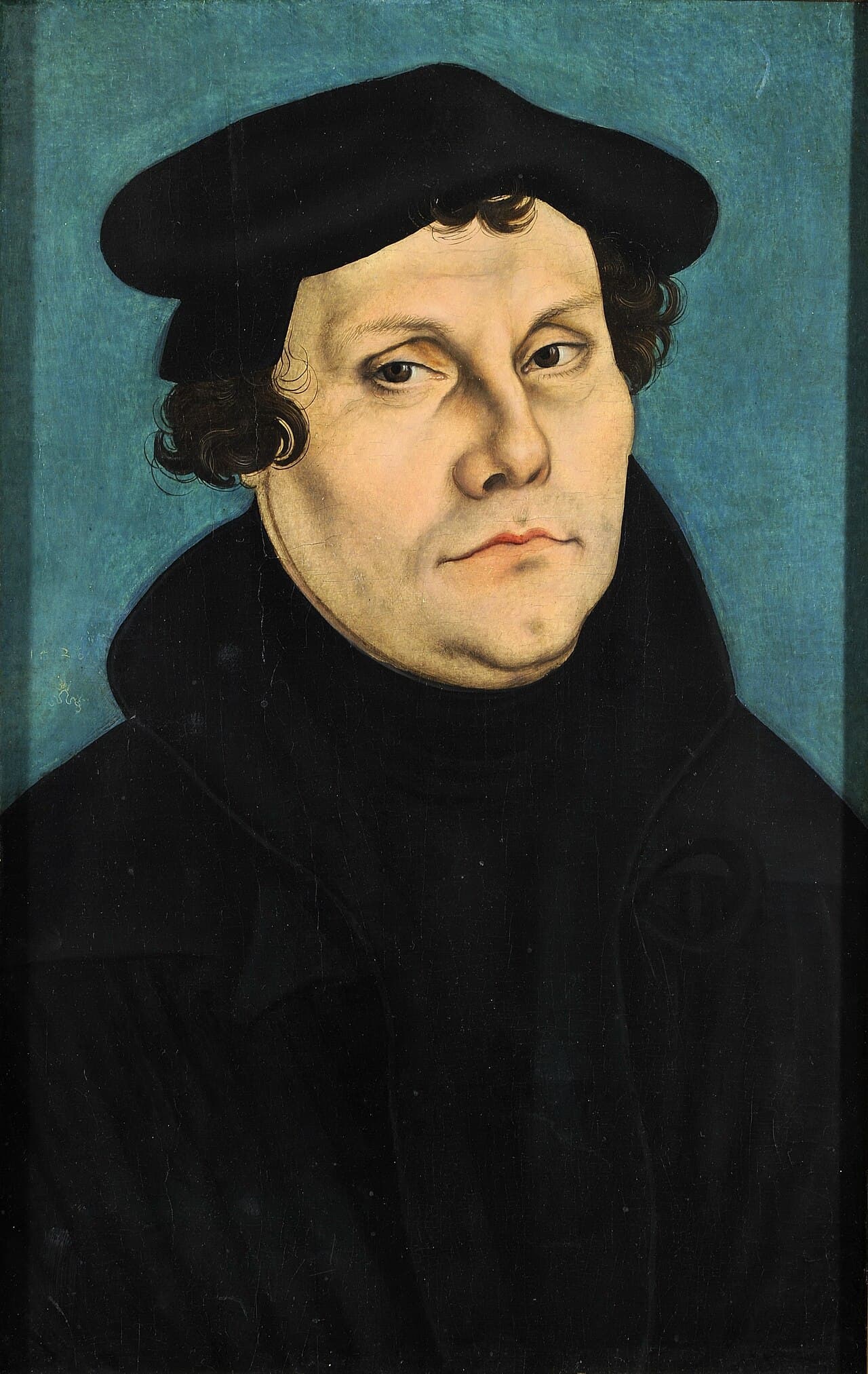
Dissent sharpened the alternative: Wycliffe and Hus defined the church as the whole body of the predestined — invisible, known only to God — which made the visible hierarchy contingent. Hus burned for it at Constance (1415); Luther, debating Eck in 1519, discovered to his own shock that he agreed with Hus.
Key voicesCreed of 381 · Boniface VIII · John Wycliffe · Jan Hus
1520–1560
Visible and invisible; the marks redefined
What happened
The Reformers systematized Hus's insight: the invisible church (all the elect, known to God) and the visible church (the mixed assembly) are distinct — and the visible church is present wherever its true marks are found. Augsburg's definition became Protestantism's charter: 'the congregation of saints in which the gospel is purely taught and the sacraments rightly administered.' Not hierarchy but Word and sacrament; some added discipline as a third mark.
Primary source“The church is the congregation of saints in which the gospel is purely taught and the sacraments are rightly administered.”
— Augsburg Confession VII, 1530
How it was received
Anabaptists developed a distinct believers'-church account: a voluntary, baptized, disciplined community separated from coercive state religion. Catholic and Protestant opponents compared them to Donatists, but Anabaptist theology arose from Reformation disputes over baptism, discipleship, and the sword rather than by direct descent from the ancient schism.
Key voicesMartin Luther · Augsburg Confession · Menno Simons
1854–1965
Extra ecclesiam softened; Rome re-describes the boundary
What happened
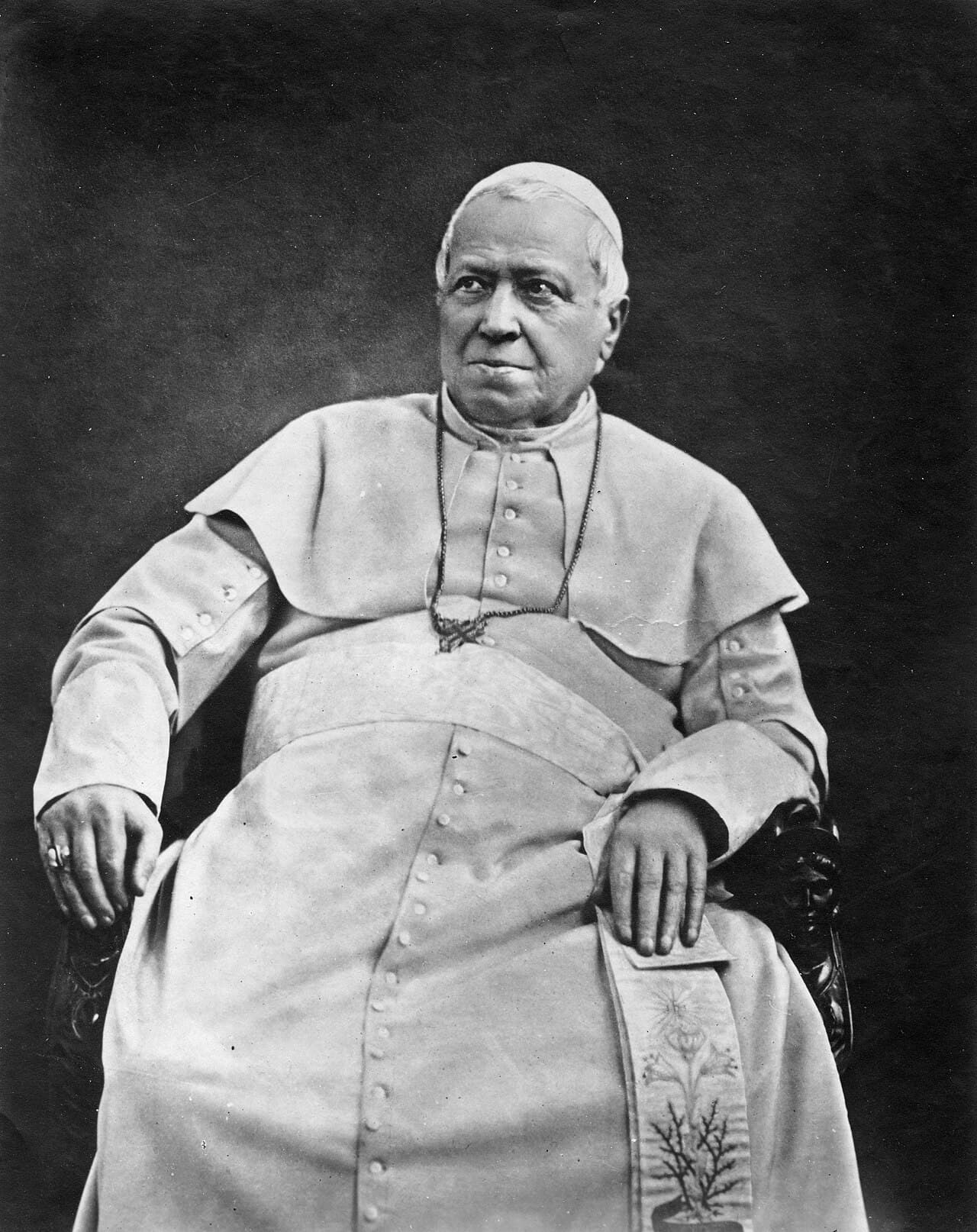
Catholic teaching clarified that the axiom did not limit God's grace to visible membership: Pius IX discussed inculpable ignorance, and baptism of desire had long been recognized. A 1949 Holy Office letter rejected Leonard Feeney's restrictive interpretation; he was excommunicated in 1953 for persistent disobedience, not by a judgment that the axiom itself was false.
Primary source“This Church, constituted and organized in the world as a society, subsists in the Catholic Church… although many elements of sanctification and of truth are found outside of its visible structure.”
— Vatican II, Lumen Gentium 8, 1964
How it was received
Vatican II completed the re-description: the one church of Christ 'subsists in' the Catholic Church — language chosen over 'is' — with true 'elements of sanctification' outside her visible bounds, and other Christians honored as 'separated brethren.' Traditionalists protested the shift; ecumenism was built on it.
Key voicesPius IX · Feeney case 1949 · Lumen Gentium
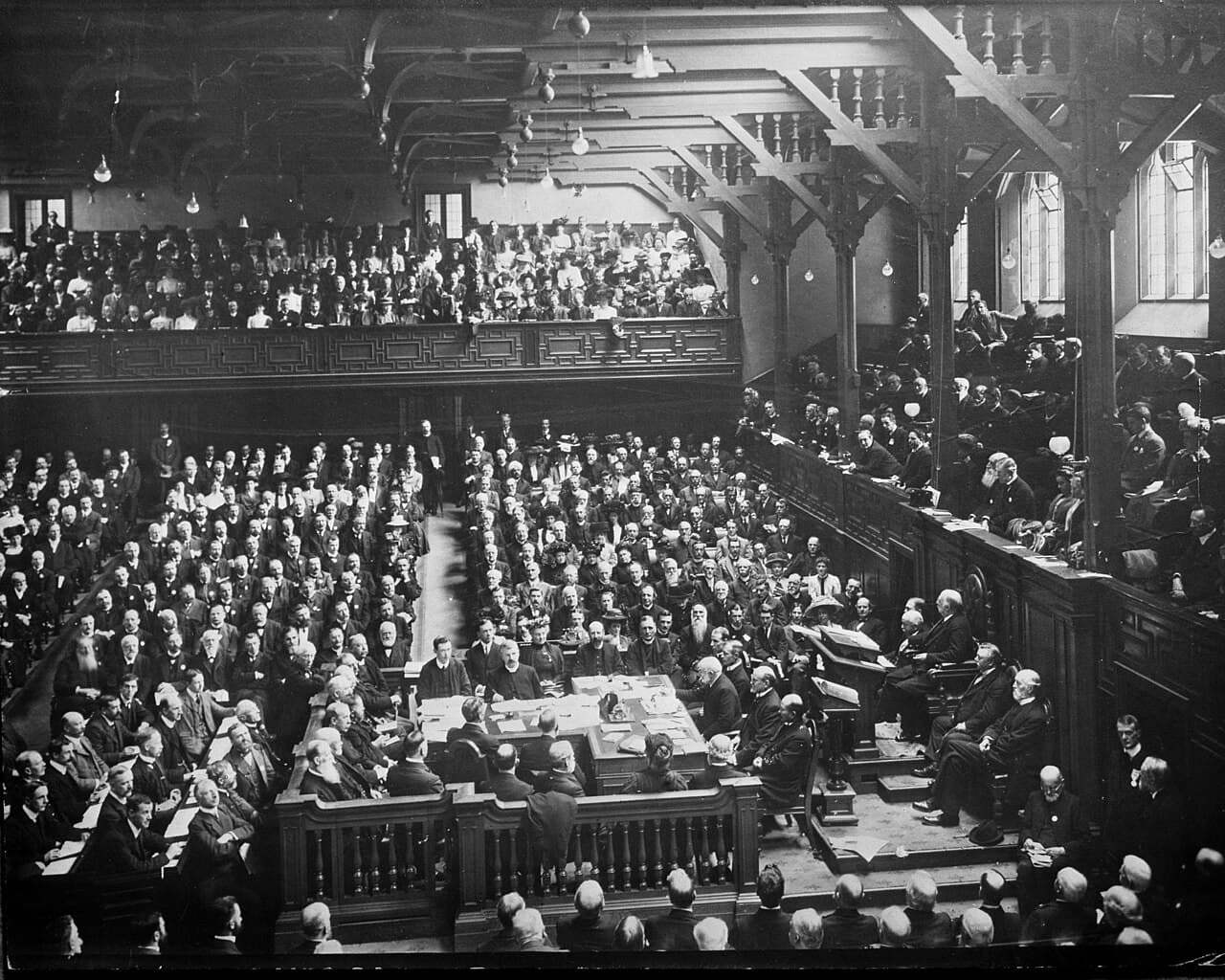
1910–today
Ecumenism and the exploding ecclesial map
What happened
The missionary conference at Edinburgh (1910) launched the ecumenical century: the World Council of Churches (1948), bilateral dialogues, mutual recognitions of baptism — driven by the scandal that a divided church preaches reconciliation. Convergence texts mapped astonishing agreement; full communion mostly still waits.
How it was received
Meanwhile the ecclesial map became far more diverse, with historic denominations, independent networks, and nondenominational congregations expanding across a Christianity whose demographic center has shifted toward Africa, Asia, and Latin America. Counts of 'denominations' vary dramatically with methodology and should not be mistaken for an equal number of doctrinally distinct churches.
Key voicesEdinburgh 1910 · WCC 1948 · Global Christianity
The present landscape
Where the traditions stand today
Catholic
The church of Christ subsists in the Catholic Church, governed by Peter's successor; other Christians are truly, if imperfectly, in communion with her; the four marks are visible in her.
Orthodox
The Orthodox Church is the one church of the creed, defined eucharistically — the church is fully present wherever the bishop celebrates the Eucharist with his people; the boundaries of grace beyond her are left to God.
Protestant
The invisible church of all believers is manifest wherever Word and sacrament are truly present (magisterial), or in the gathered community of professing believers (free church); the marks test every institution.