The argument through time
History enters the room.
c. 30–110
'This is my body' — and the first witnesses
What happened
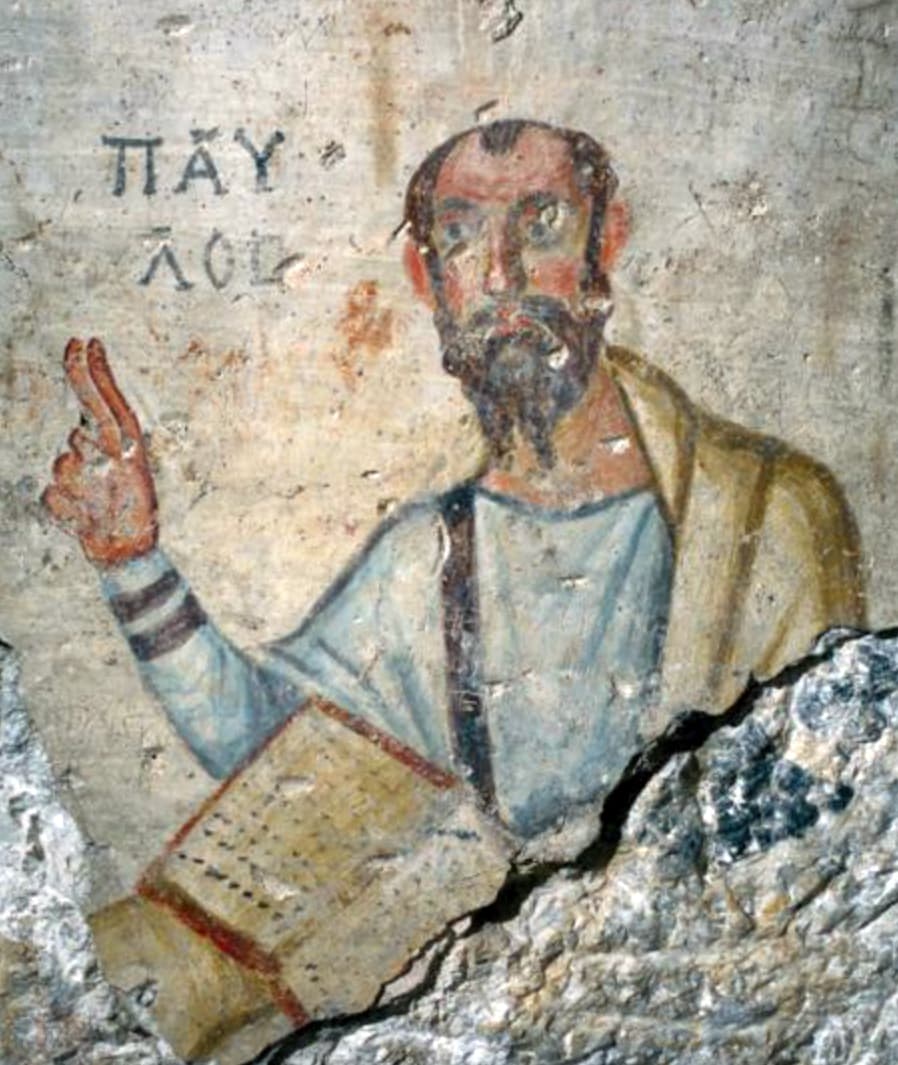
Jesus' words at the Last Supper, Paul's warning about discerning the body (1 Cor 11), and the scandalous bread-of-life discourse (John 6) set the terms. The Didache shows a fixed thanksgiving meal; Ignatius of Antioch, c. 110, uses startlingly realist language against docetists who denied Christ's flesh.
Primary source“They abstain from the Eucharist and from prayer, because they do not confess that the Eucharist is the flesh of our Savior Jesus Christ.”
— Ignatius, To the Smyrnaeans 7, c. 110
How it was received
His famous phrase — the Eucharist as 'the medicine of immortality' — shows how early the rite was understood as actually conveying life, not merely recalling it.
Key voicesPaul · John 6 · Didache · Ignatius of Antioch
150–430
Patristic realism — with a symbolic vocabulary
What happened
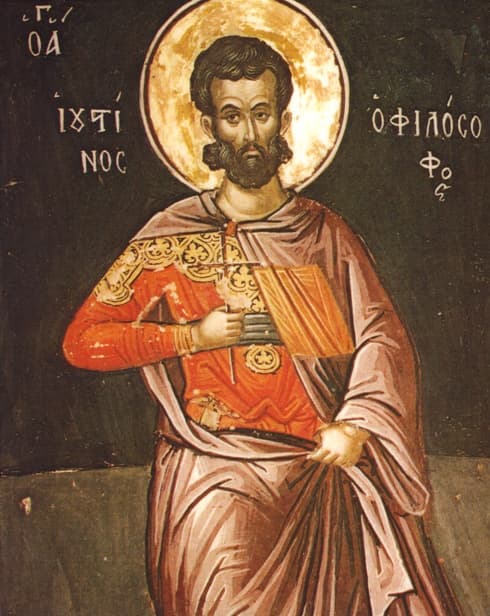
Justin Martyr insists the food is 'not common bread': it is the flesh and blood of the incarnate Jesus. Yet the same fathers freely call the elements 'figures,' 'symbols,' and 'antitypes' — for them symbol and reality were not opposites, as they would later become.
Primary source“For not as common bread and common drink do we receive these… the food which is blessed… is the flesh and blood of that Jesus who was made flesh.”
— Justin Martyr, First Apology 66, c. 155
How it was received
This double vocabulary is why both sides of every later Eucharistic war could quote the fathers. Ambrose stressed the transforming power of Christ's word over the elements; Augustine stressed sign, faith, and the church as Christ's true body — 'Be what you see; receive what you are.' The West inherited both emphases, unreconciled.
Key voicesJustin Martyr · Irenaeus · Ambrose · Augustine
831–1079
The first Eucharistic controversies
What happened
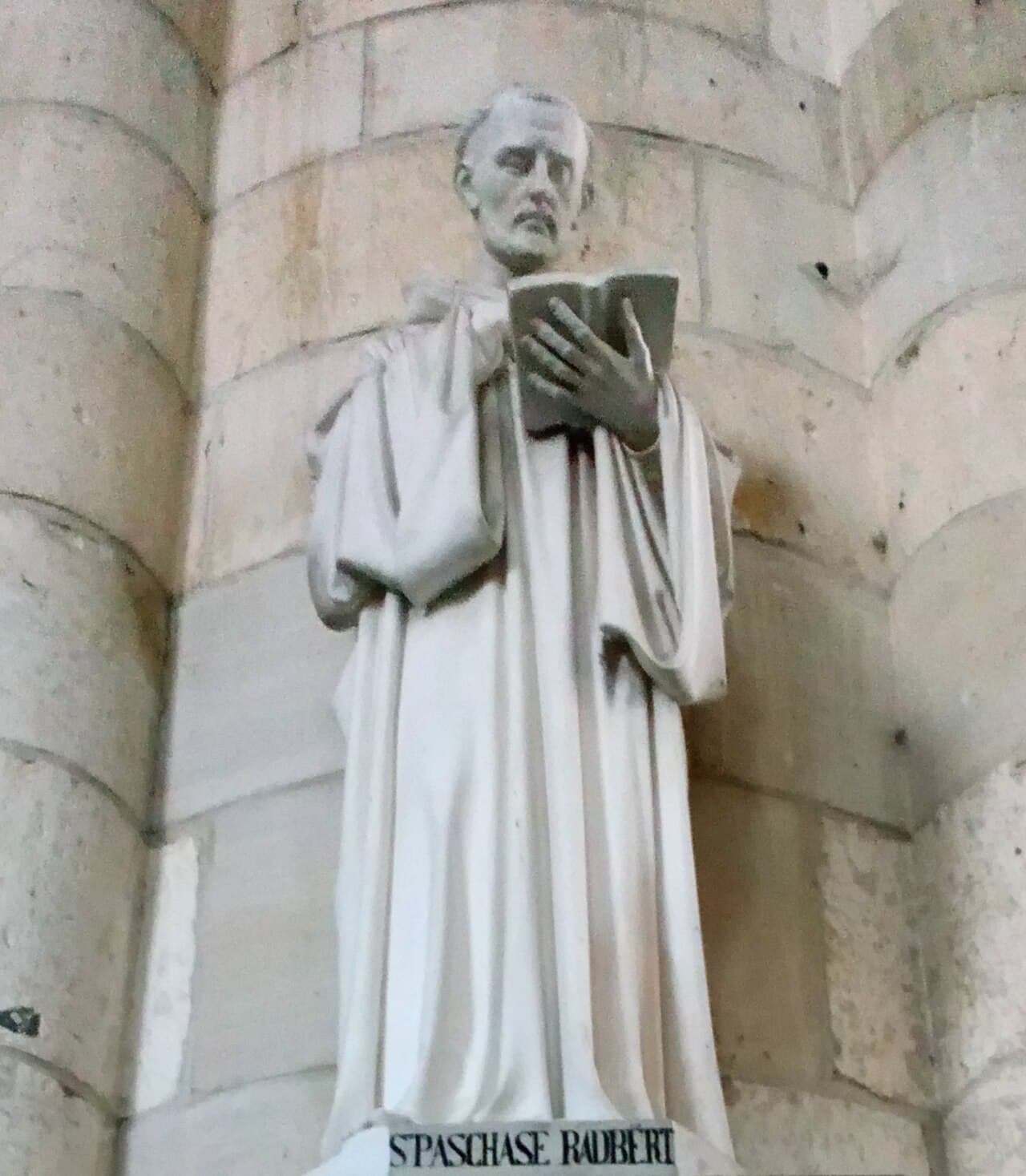
The first sustained Latin controversy devoted specifically to how Christ is present arose in the ninth century, between two monks of Corbie: Paschasius Radbertus stressed identity with the body born of Mary, while Ratramnus described a real reception in sacramental figure rather than in an ordinary, visible manner.
Primary source“…the true body and blood of our Lord… are sensibly, not only in sacrament but in truth, handled and broken by the hands of the priests and crushed by the teeth of the faithful.”
— Oath imposed on Berengar of Tours, Rome, 1059
How it was received
Two centuries later Berengar of Tours revived Ratramnus's line and was forced — twice — to swear crudely realist oaths. The 1059 oath's language ('crushed by the teeth of the faithful') embarrassed even its defenders and pushed theologians toward a more refined account. The pressure produced transubstantiation.
Key voicesPaschasius Radbertus · Ratramnus · Berengar of Tours
1215–1400
Transubstantiation defined; devotion transformed
What happened
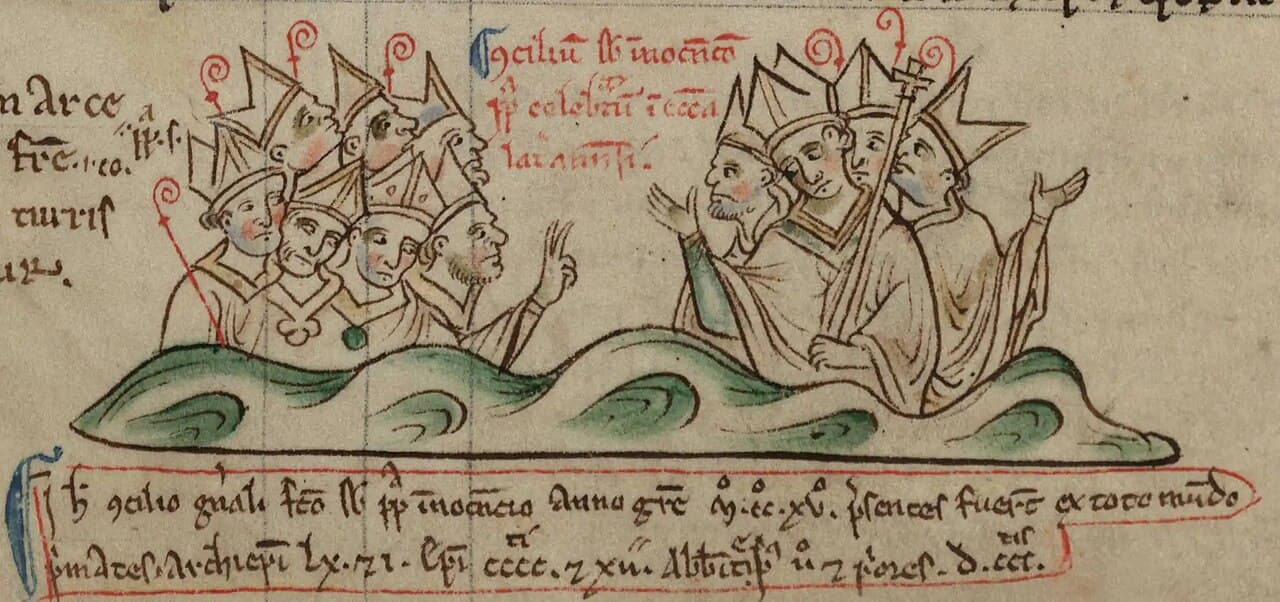
The Fourth Lateran Council (1215) canonized the term: the bread is 'transubstantiated' into Christ's body. Aquinas gave it its classic Aristotelian form — the whole substance changes while the accidents (taste, weight, appearance) remain — and wrote the feast of Corpus Christi (1264), with its processions and adoration of the host.
How it was received
Practice shifted with theory: the laity communed rarely and the chalice was withheld from them, elevation of the host became the devotional climax of the Mass, and dissenters — Wycliffe in Oxford, Hus's Bohemians demanding the cup — were condemned. The Hussite chalice became a banner of reform a century before Luther.
Key voicesLateran IV · Thomas Aquinas · John Wycliffe · Jan Hus
1517–1529
The Reformation splits over the Supper
What happened
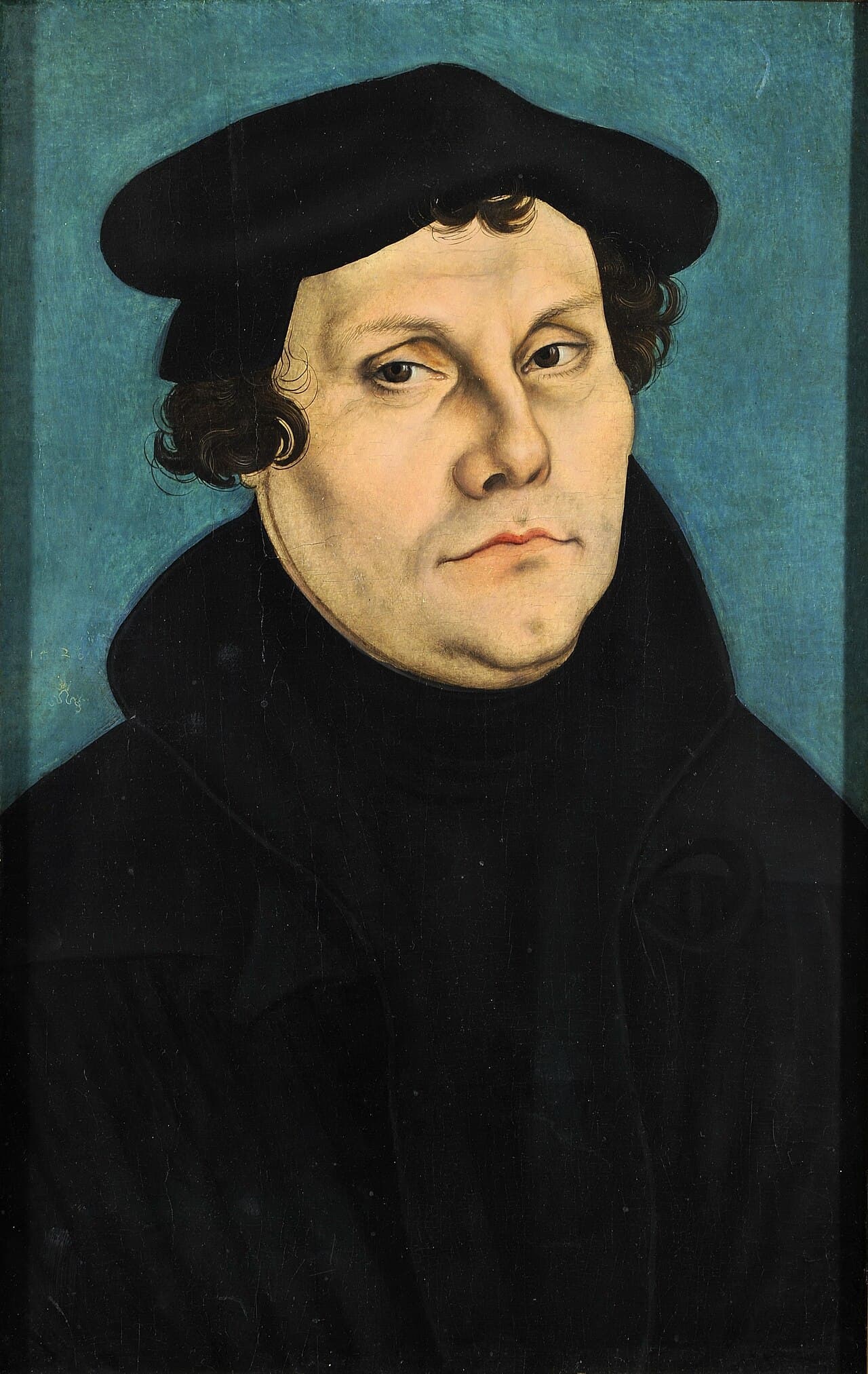
All Reformers rejected transubstantiation and the Mass as a propitiatory sacrifice — and then split among themselves. Luther held fast to the plain words 'This is my body': Christ's true body and blood are given 'in, with, and under' the bread and wine. Zwingli read 'is' as 'signifies': a memorial and pledge of allegiance by the gathered church.
Primary source“I would rather drink pure blood with the pope than mere wine with the fanatics.”
— Luther, against the Swiss, 1526
How it was received
At Marburg (1529) Philip of Hesse locked the two sides in colloquy hoping for a united Protestant front. Luther chalked Hoc est corpus meum on the table and would not move. They agreed on fourteen articles and divided permanently on the fifteenth — the Supper. Protestantism's oldest internal border was drawn there.
Key voicesMartin Luther · Huldrych Zwingli · Marburg Colloquy
1536–1563
Calvin's middle way; Trent's answer
What happened
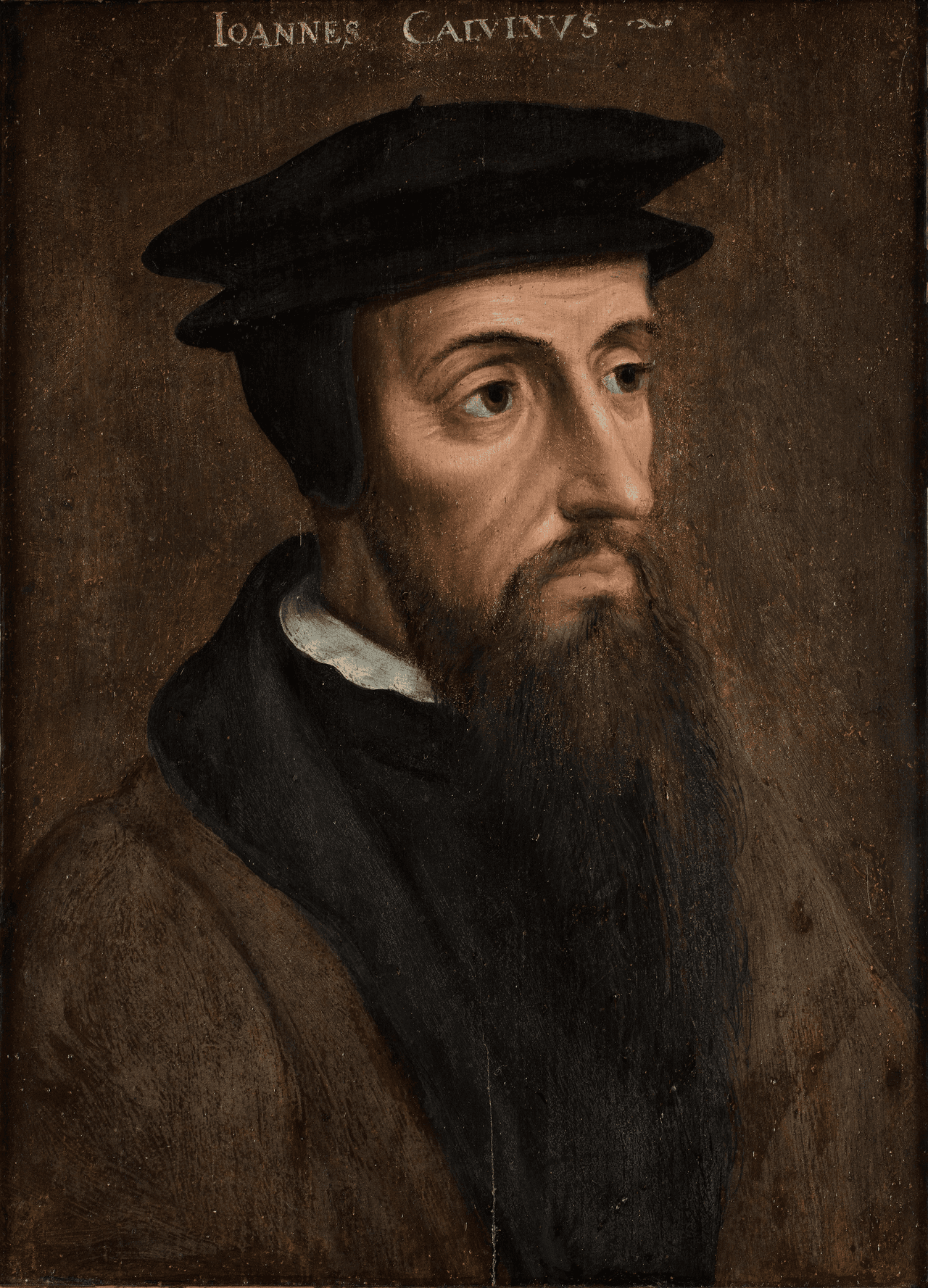
Calvin refused both a local presence in the bread and a bare memorial: in the Supper, believers are lifted by the Holy Spirit to feed truly on Christ's life-giving body in heaven. 'I rather experience it than understand it.' His view shaped the Reformed confessions and, via Cranmer's 1552 Prayer Book and the Thirty-Nine Articles, much of Anglicanism.
Primary source“'Twas God the Word that spake it: He took the bread and brake it; and what that Word did make it, that I believe and take it.”
— attributed to Elizabeth I — the classic Anglican refusal to over-define
How it was received
Trent (1551) reaffirmed transubstantiation as the 'most fitting' term, the sacrifice of the Mass, and adoration of the reserved sacrament, anathematizing the Protestant positions by name. The confessional map of the next four centuries was set.
Key voicesJohn Calvin · Thomas Cranmer · Council of Trent
1900–today
Mystery recovered, convergence attempted
What happened
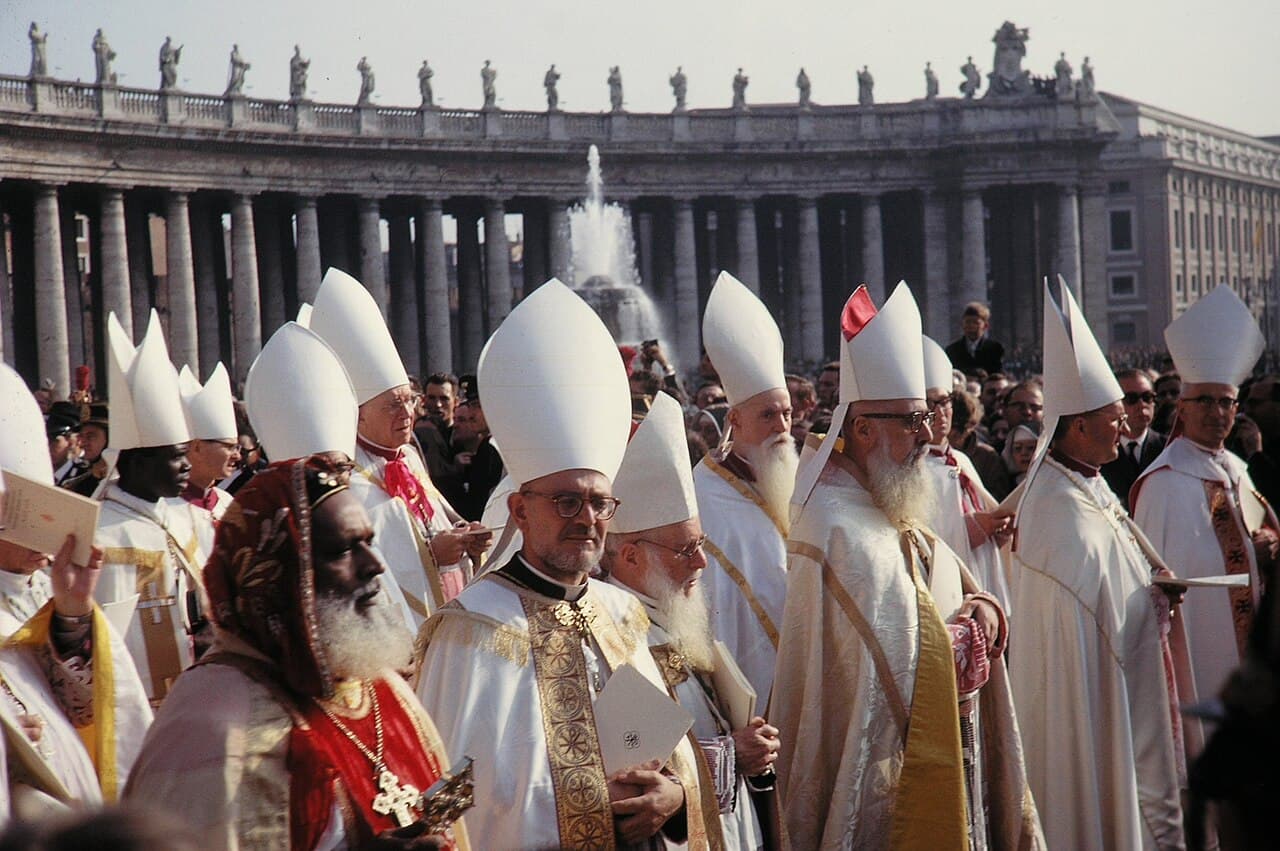
Orthodoxy confesses that the gifts truly become Christ's body and blood while usually declining to make one scholastic explanation normative. Some Orthodox documents have used language equivalent to transubstantiation, especially in early-modern controversies, but mystery remains the dominant register. Vatican II re-centered the Eucharist as 'source and summit' of Christian life and encouraged fuller, more frequent participation.
Primary source“The eucharistic meal is the sacrament of the body and blood of Christ… Christ's real, living and active presence.”
— Baptism, Eucharist and Ministry, 1982
How it was received
Twentieth-century dialogues produced startling convergence on paper: Baptism, Eucharist and Ministry (1982), Anglican–Catholic ARCIC statements, and Lutheran–Catholic agreements affirming Christ's real, effective presence together. Full intercommunion, however, remains rare — the table is still the place where the divisions are most visible, precisely because it is the sacrament of unity.
Key voicesVatican II · BEM 1982 · ARCIC
The present landscape
Where the traditions stand today
Catholic
Transubstantiation: the whole substance of bread and wine becomes Christ's body and blood; the Mass re-presents Calvary's one sacrifice; the host is adored.
Orthodox
The gifts truly become Christ's body and blood in the eucharistic mystery; no philosophical definition is imposed. The liturgy is heaven on earth.
Lutheran
Christ's true body and blood are received in, with, and under the bread and wine (sacramental union) by all communicants.
Reformed / Baptist / Evangelical
Reformed: true spiritual feeding on Christ by the Spirit through faith. Baptist and most evangelical churches: a memorial ordinance proclaiming the Lord's death.