The argument through time
History enters the room.

c. 165 BC–100 AD
Resurrection hope, not escape
What happened
The Jewish matrix of Christian hope was bodily resurrection (Daniel 12) and a healed creation — not the Greek immortality of a soul escaping matter. The New Testament runs on the same rails: Christ's resurrection as 'firstfruits,' creation itself groaning for liberation (Romans 8), and Revelation's finale in which the holy city descends to earth — 'the dwelling of God is with men.'
Primary source“Then I saw a new heaven and a new earth… and I saw the holy city, new Jerusalem, coming down out of heaven from God.”
— Revelation 21:1–2
How it was received
Alongside this stands the promise of presence and sight: 'today you will be with me in paradise'; 'now we see in a mirror dimly, but then face to face.' The two strands — new creation and vision of God — would take turns dominating.
Key voicesDaniel 12 · Paul · Revelation

100–300
Chiliasm: the very earthy early hope
What happened
Many early fathers — Papias, Justin, Irenaeus, Tertullian — expected a millennium: Christ reigning on a renewed, almost extravagantly fertile earth (Papias describes vines of ten thousand branches). For Irenaeus this materiality was the point, against Gnostics who despised creation: the God who made the world will not abandon it.
Primary source“For it is just that in that very creation in which they toiled and were afflicted… they should receive the reward of their suffering.”
— Irenaeus, Against Heresies 5.32.1, c. 180
How it was received
Origen and the Alexandrian school recoiled from such 'Jewish literalism' and spiritualized the hope — ascent of the soul, education through the heavens toward God. The church's two eschatological temperaments were now both in play.
Key voicesPapias · Justin Martyr · Irenaeus · Origen
354–430
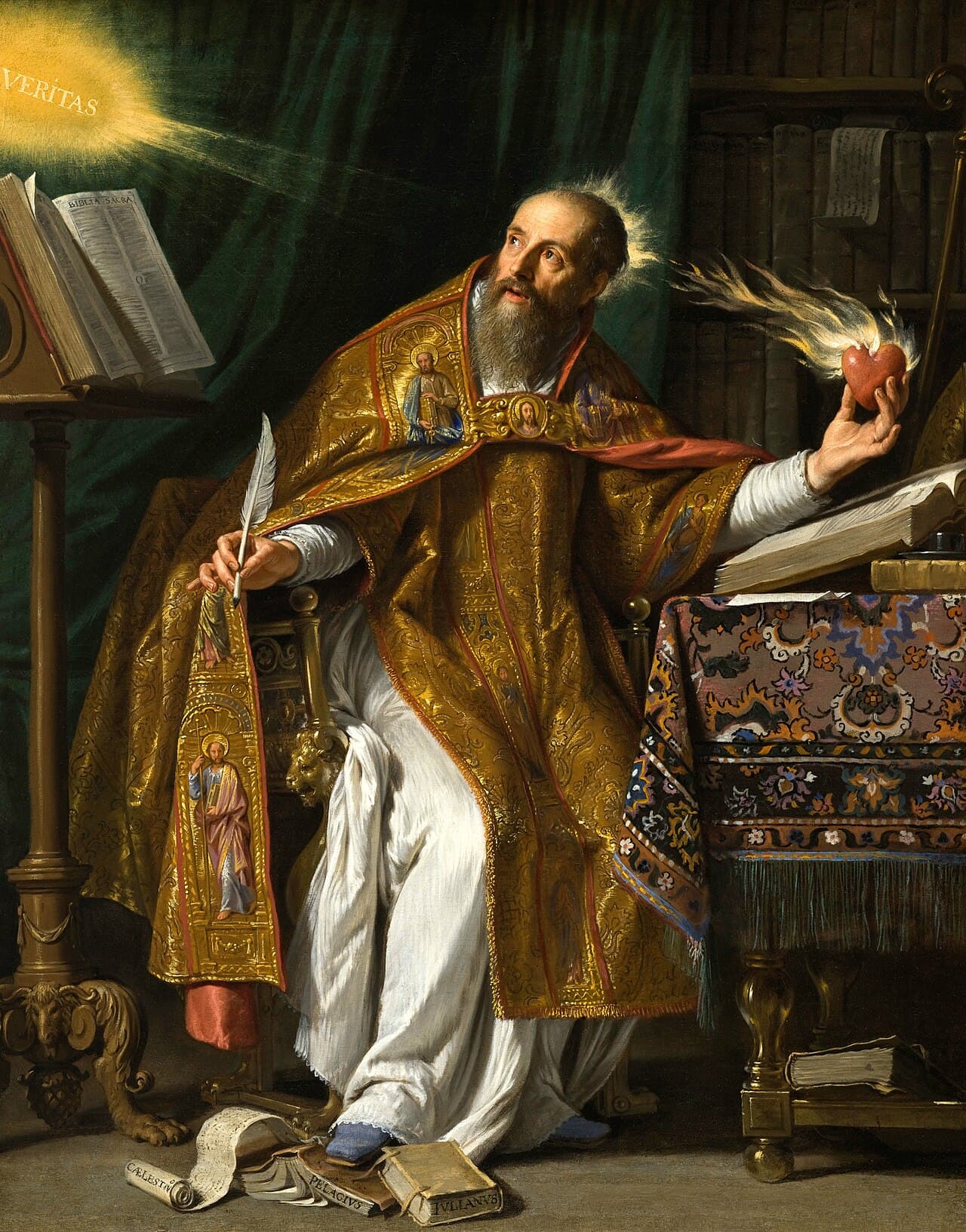
Augustine: rest, vision, and the end of restlessness
What happened
Augustine, once a millenarian himself, reinterpreted the millennium as the present age of the church — after which chiliasm faded in the mainstream for a thousand years. Heaven, for him, is the satisfaction of the desire beneath all desires: to see and enjoy God without end, in a resurrected and glorified body.
Primary source“There we shall rest and see, see and love, love and praise. Behold what shall be in the end, and shall not end.”
— Augustine, City of God 22.30, 426
How it was received
The closing lines of The City of God became the West's definition of heaven for the next millennium.
Key voicesAugustine
1274–1351
Beatific vision — and the Eastern path of theosis
What happened
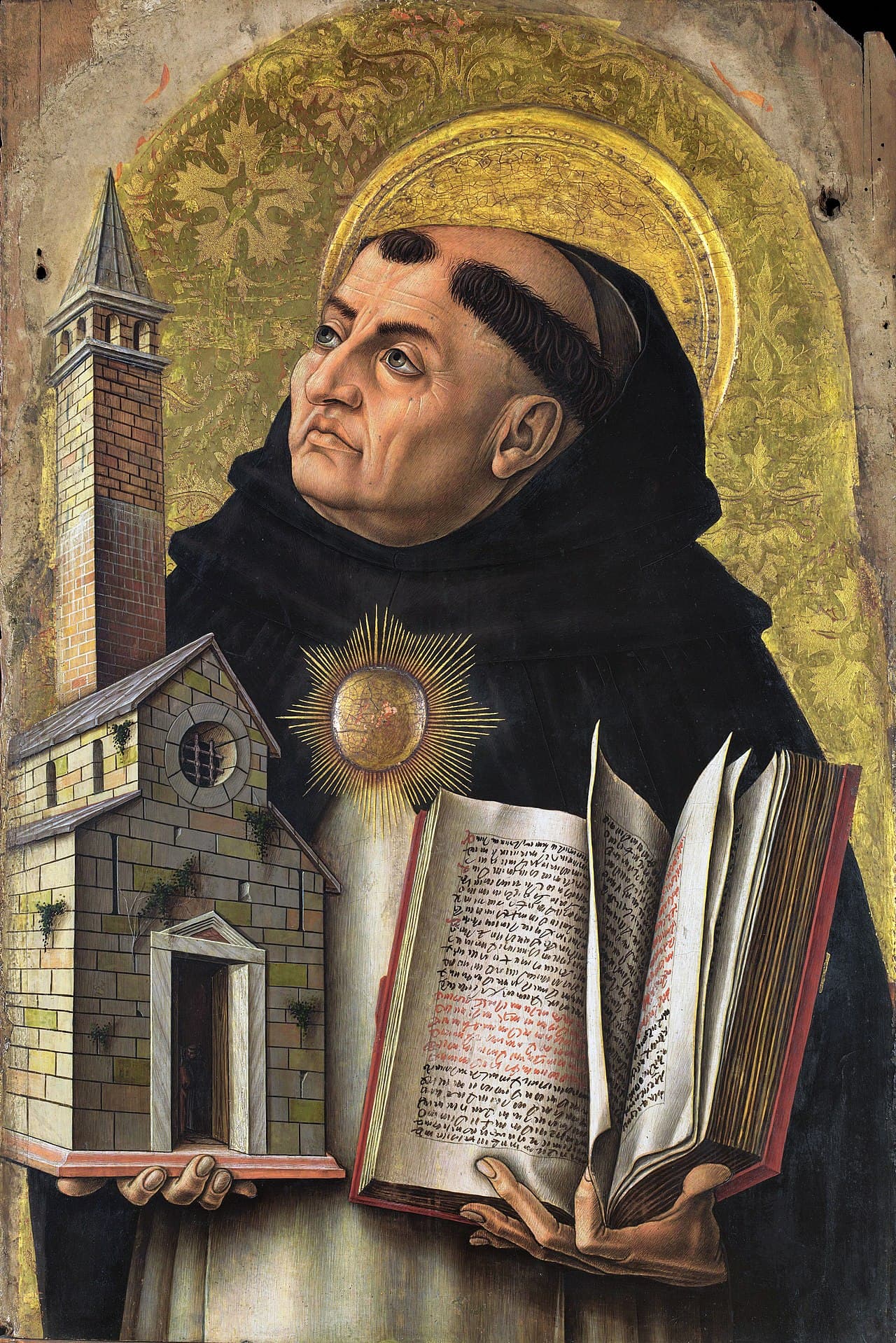
Aquinas made it precise: heaven's essence is the beatific vision, the intellect beholding God's very essence, in which every longing rests. When Pope John XXII mused that the saints must wait for the resurrection to see God, the backlash was fierce; his successor Benedict XII settled it by decree (Benedictus Deus, 1336): the purified see God 'face to face' immediately after death, even before the resurrection. Dante's Paradiso turned the doctrine into poetry, ending in the vision of 'the Love that moves the sun and the other stars.'
Primary source“…these souls have seen and see the divine essence with an intuitive vision, and even face to face, without the mediation of any creature.”
— Benedict XII, Benedictus Deus, 1336
How it was received
The Christian East framed the goal differently: not seeing God's essence (which remains forever beyond creatures) but theosis — real participation in God's energies, becoming 'partakers of the divine nature.' Gregory Palamas's defense of this vision was made Orthodox doctrine by councils in the 1340s–1351. Athanasius had given it the ancient formula: 'He became man that we might become god.'
Key voicesThomas Aquinas · Benedict XII · Dante · Gregory Palamas · Athanasius

1517–1700
Reformation and Puritan heaven: enjoying God
What happened
The Reformers inherited the vision of God but re-centered it on communion: heaven is unbroken fellowship with Christ, the church glorified. The Westminster divines compressed it into the most quoted sentence of Reformed theology — man's chief end is 'to glorify God, and to enjoy him forever.'
Primary source“Man's chief end is to glorify God, and to enjoy him for ever.”
— Westminster Shorter Catechism, Q.1, 1647
How it was received
Puritan writers like Richard Baxter (The Saints' Everlasting Rest, 1650) made meditation on heaven a daily discipline — heaven as rest for the weary church militant.
Key voicesJohn Calvin · Westminster Assembly · Richard Baxter
![Photograph of American author Elizabeth Stuart Phelps [Ward] (1844-1911). From the book In After Days: Thoughts on the Future Life (New York: Harper and Brothers, 1910).](/_next/image?url=%2Fimages%2Fhistory%2Fsections%2Felizabeth-stuart-phelps-4092563e.jpg&w=3840&q=75&dpl=dpl_7eb3JpnMe4ekXihsASES3CnRvKef)
1800–1900
The domestic heaven
What happened
The Victorian era relocated heaven's center of gravity from the vision of God to the reunion of families: heaven as home perfected, loved ones waiting at the gate. Elizabeth Stuart Phelps's novel The Gates Ajar (1868), written for a nation grieving its Civil War dead, imagined houses, gardens, and pianos in heaven — and sold sensationally.
How it was received
Critics called it sentimentality; historians note it answered real grief. Much modern popular imagery of heaven — clouds, gates, reunions — descends from this century, not from Scripture or the fathers.
Key voicesElizabeth Stuart Phelps · Victorian hymnody · Spiritualism (reactively)
1950–today
New creation recovered: 'life after life after death'
What happened
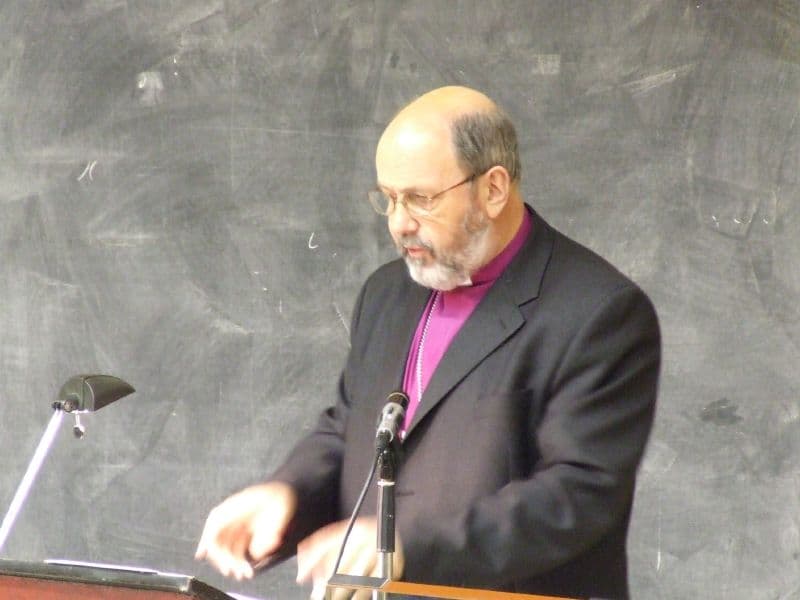
Twentieth-century biblical scholarship pushed back hard on 'going to heaven when you die' as the sum of Christian hope. N.T. Wright's Surprised by Hope (2008) popularized the recovery: the intermediate state ('paradise,' being 'with Christ') is real but penultimate; the final hope is resurrection in a renewed creation — 'life after life after death' — with Revelation's city coming down, not souls going up. Heaven and earth, in the end, are remarried. In this the moderns sound strikingly like Irenaeus: the story came full circle.
Primary source“Heaven is important, but it's not the end of the world.”
— N.T. Wright, Surprised by Hope, 2008
How it was received
Catholic teaching (the Catechism defines heaven as perfect communion with the Trinity, and affirms the renewal of the cosmos), Orthodox theosis, and evangelical new-creation theology now converge on a hope that is both the vision of God and a redeemed material world — while popular piety, shaped by two centuries of cloud-and-gate imagery, is still catching up.
Key voicesN.T. Wright · Catechism of the Catholic Church · Jürgen Moltmann
The present landscape
Where the traditions stand today
Catholic
Heaven is the beatific vision — perfect life and communion with the Trinity — enjoyed by the purified soul at death and completed in the resurrection of the body and the new creation.
Orthodox
The goal is theosis: eternal, ever-deepening participation in God's life and glory, consummated in the resurrection and the transfigured cosmos.
Protestant
To be 'with Christ' at death, then bodily resurrection and the new heavens and new earth. Emphases range from the vision of God to Wright-style new-creation hope; the older 'clouds and harps' picture is widely retired by theologians, if not by popular culture.